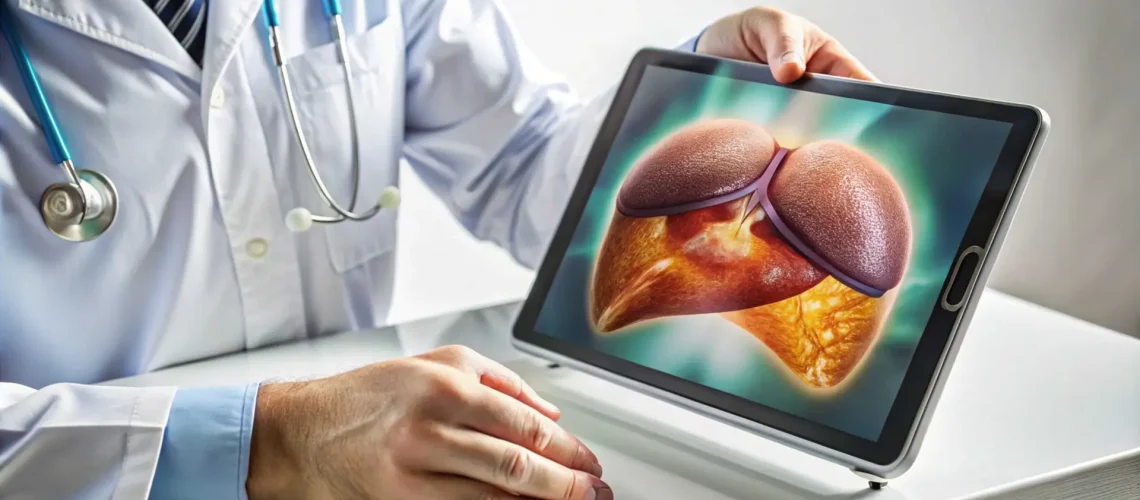
Liver disease often progresses silently. Many individuals feel completely healthy until discomfort or abnormal blood tests appear. This is why proactive liver health checks have become essential. Modern diagnostics now allow people to understand their liver condition early and take action long before symptoms arise.
For those who want to go beyond a single scan, an advanced health assessment at Lumen Harley Street combines FibroScan with comprehensive biomarker testing for a complete picture of your health.
One of the strongest tools for early insights is the FibroScan liver test, which measures liver stiffness and fat content without surgery or biopsy in most cases. Rather than simply diagnosing illness, this test plays a motivational role. When paired with whole-body wellness practices, it becomes a starting point for deeper transformation. Patients move from fear of the unknown to confidence built on measurable data.
This article will help you understand how FibroScan empowers preventative care. You will learn how this scan integrates into holistic plans and how it helps track both disease risk and wellness progress.
What is a FibroScan Scan?
FibroScan uses ultrasound-based transient elastography to assess liver tissue stiffness and fat content. The result is a clear numerical score in kPa (stiffness) and CAP value (fat estimate). Most patients can undergo testing comfortably within minutes.
Unlike a biopsy, FibroScan screening does not require needles, anaesthesia, or recovery time. Because of this, clinicians commonly recommend it for repeated monitoring when evaluating liver improvements. Patients can measure progress across months, making it ideal for longitudinal care.
The Science Behind Liver Fibrosis and Fat Buildup
Liver stiffness increases when fibrosis or scar tissue develops. Higher stiffness can indicate advancing liver injury. Liver fat accumulation (steatosis) signals stress from metabolic factors, diet, inflammation, or toxins.
Fibrosis risk increases when liver stress remains unresolved for long periods. Fat buildup can occur even without alcohol intake. Because of the liver’s central metabolic role, fat in the liver often signals systemic metabolic imbalance.
How FibroScan Shifts Care from Detection to Wellness Tracking
Seeing real numbers changes behaviour more effectively than experiencing late symptoms. Patients understand severity instantly through scores. This removes guesswork from health planning and boosts readiness to adopt medical guidance.
The scan motivates action when individuals see how early liver stress can improve with proper interventions. FibroScan not only detects disease. It validates improvement, showing patients that lifestyle changes work when followed consistently.
Why This Test is Valuable for Prevention
Routine liver fibroscan measurement helps patients benchmark their health before symptoms emerge. This reduces panic and encourages consistency in care. It becomes a wellness baseline, not a late-stage alarm.
Because metabolic liver issues evolve slowly, frequent FibroScan tracking builds a measurable journey. It clearly shows regression, stabilisation, or worsening. This helps patients understand patterns instead of imagining outcomes.
Interpreting Liver Scores
FibroScan results are easy to interpret when clinicians explain them clearly. Typical stiffness ranges indicate no fibrosis, mild, moderate, or severe fibrosis. CAP values indicate percentage estimates of liver fat.
During testing, clinicians also observe waveform stability and signal reliability. They explain the score confidence levels after scanning. This ensures every result is trusted and actionable, not confusing or vague.
The strongest FibroScan benefits go beyond safety. They also:
- Safer repeated liver monitoring
- Motivation for real lifestyle shifts
- Guided interventions with clarity
- Early awareness of silent liver stress
- Measurable scores to track improvement
This shifts liver care from symptom-based treatment to score-based wellness progression. Patients stop waiting for pain. They start building prevention instead.
Understanding Normal Range
Most patients ask first: What is a normal liver score? A FibroScan liver normal range refers to stiffness values that suggest no fibrosis and a low fat CAP reading. Clinicians explain how ranges vary slightly across labs and BMI, not drastically.
A normal score motivates maintenance. A mild elevation motivates early improvement. Moderate or higher scores motivate structured care. No results are interpreted in isolation without medical guidance.
When Scores Encourage Integrated Support Models
A fibroscan of liver score serves as the truth point driving holistic support. When scores rise moderately, patients adopt structured clinician guidance without resistance. Some clinics also prescribe formulations or supplements to support improvement backed by recent medical research.
This support becomes effective because clinicians track results over months to confirm measurable regression. Patients follow this model when they want motivation, measurement, clarity of staging, and validation of consistent improvement.
How Nutrition and Lifestyle Influence Liver Wellness
Scientific studies repeatedly show that liver health is influenced significantly by diet. Regular alcohol, ultra-processed food, obesity, metabolic disease, or toxin exposure directly elevate liver-stress markers. Balanced meals and antioxidant-rich foods lower measurable risk.
Dietary approaches that support liver wellness include:
- High-fiber meals
- Whole fruits & vegetables
- Limited alcohol and toxins
- Lean proteins & healthy fats
- Reduced sugar and trans-fat
Holistic liver improvement is not extreme dieting. It is sustainable everyday patterns backed by results.
Lifestyle Pillars
Exercise reduces liver fat, improves metabolic signalling, and increases hepatic oxygen flow. Most patients benefit from 30 minutes of moderate physical activity per week. This complements nutrition for maximum measurable benefit.
Key wellness pillars proven to influence liver outcomes include:
- Stable sleep cycles
- Movement & exercise
- Low toxin exposure daily
- Reduced stress hormones
- Healthy weight maintenance
These factors reflect directly in follow-up liver scans, proving holistic care works when followed precisely.
Liver Wellness Requires Spaced Monitoring for Best Progress
Once a liver fibroscan test gives the baseline, patients often realise that results can improve when paired with discipline. Follow-up testing validates the journey. Many patients continue to undergo repeated scans every 3-6 months if mild stress is detected.
Supporting Tests That Complement FibroScan Results
Doctors rarely rely on one piece of information. They pair FibroScan with enzyme levels (ALT/AST), ratios, scores like FIB-4, biomarker tests, metabolic panels, glucose, cholesterol, triglycerides, and conventional ultrasound. This strengthens liver-care confidence and ensures systemic alignment.
Supporting tests may include:
- Lipid profile
- Liver enzyme panel
- Metabolic health check
- BMI and waist-hip ratio
- Glucose-insulin profiling
- Inflammatory biomarker tests
- Ultrasound imaging as needed
All these validate staging and metric stability across months.
In addition to these diagnostics, our extra services include specialist consultations and tailored wellness programmes that complement your liver care plan.
FibroScan Helps Guide Treatment, Not Just Label It
Lifestyle suggestions become stronger when physicians connect them to numbers. A personalised plan is built using stiffness severity, CAP fat score, inflammation, BMI, alcohol intake history, liver biomarkers, systemic indicators, and symptom auditing if present. This creates a tailored action path supported by clinical data confidence.
Why Prevention Moves Better When the Data Feels Personal
A strong baseline builds confidence. A rise gives structured direction. Regression motivates discipline retention. The data becomes personal proof that individual action matters.
This makes liver-health journeys emotional, measurable, behaviour-driven, disciplined, and optimistic. Patients do not feel blamed. They feel seen, guided, supported, and sure about improvement and staging clarity.
Why Patients Choose FibroScan as a Wellness Partner Test
The liver scan fibroscan test is chosen by patients because it is safe, fast, measurable, accurate, and does not disrupt daily life. It supports people trying to detect early liver-damage risk or validate improvement when following holistic plans.
How This Data Integrates into Long-Term Wellness Planning
Not just disease staging, how FibroScan supports holistic liver care becomes clear when results help shape personalised nutrition, sleep, movement, and toxin-exposure discipline changes. The reports tell patients when the intervention is working and help physicians further personalise the plan if needed.
Lifestyle Plans
Proactive patients adopt plans that include:
- Engine off at red lights → lowers urban emissions inhalation
- Less toxin exposure lifestyle → helps long-term liver stress drop
- Cleaner energy adoption → reduces the burden of inhaled toxins
- No burning waste at home → improves air quality micro-environment
- Metro & public transport preference → lowers personal vehicle emission share
These behavioural changes reflect follow-up readings, motivating faster adoption of patient consistency.
Key Benefits of Combining FibroScan and Holistic Liver Care
Patient Understanding Becomes Faster
Medical complexity becomes easier when patients see one mental image: a number they can track. Stiffness severity becomes instantly understandable. They stop guessing about fibrosis.
Treatment Staging Improves Precision
Doctors can stage injury and personalise the care approach. This avoids over-treatment or under-treatment confusion. They adjust plans confidently using data.
Patients Stay Disciplined Longer
Numbers emotionally activate discipline better than symptoms. Regression motivates retention. Retention motivates long-term maintenance.
Why This 360-degree Wellness Lens is Empowering for Patients
Holistic liver care supported by data motivates patients to view liver health beyond diagnosis. It becomes a measurable healing roadmap. Prevention, tracking, nutrition, exercise, sleep, and discipline become one structured plan instead of scattered anxiety.
This approach empowers patients to take ownership gently, not emotionally harshly. They feel supported and not blamed. This builds trust and retention in wellness planning.
A Lumen Two health check pairs FibroScan results with a thorough review of your metabolic and cardiovascular markers, offering clinically actionable insights tailored to your lifestyle.
Winding Up
Holistic liver health moves beyond symptom-based care. The FibroScan liver test serves as the core baseline for motivating prevention, staged care, and measurable progress tracking. It empowers patients to take early action while giving physicians a precise tool to personalise nutrition and wellness plans.
By combining non-invasive diagnostics with everyday health behaviour shifts, liver care becomes measurable, disciplined, optimistic, and proactive. Patients feel supported and ready to adopt structured interventions confidently. A follow-up liver scan becomes proof that small, disciplined changes matter.
Ready to take the first step? Book a liver health check with our specialist team at Lumen Harley Street and get your personalised FibroScan results with clinical guidance.
Book a specialist consultation at Lumen Harley Street to understand your liver health today.